Straipsniai užsienio kalbomis
Mes taip norim, kad visi klubai A lygoje butu profesionalais, kad tie klubai to profesionalumo besiekdami ir pastimpa. Jei maziau reikalautume, ziurek, gal ir ilgiau gyventu kokie Mazeikiai ar Taurage. Gyvenimas rodo, kad estai pasirinko teisingesni kelia nei lietuviai ir latviai.
Pastimpa ne todėl, kad siekia profesionalumo. Pastimpa nuo to, kad ubagais būdami bando įsitrinti į aukštesnį lygį, nei patys paveža.
Vokiečiai važiuoja futbolo-bahn`u, lenkai futbolo greitkeliu, o pribaltai važinėja bekele.
Nereikia būti naiviems ir galvoti, kad kažkuris takelis bekelėje (pelkėje) yra teisingesnis.
Pergalė pas mus tame, kad kuris klubas viduryje sezono neužsilenkia.
Beje, estai, kažkodėl teisingo kelio išsižada, ir ruošiasi eiti neteisingu keliu. Kažin, kodėl taip nutiko? Muti, kokia tavo nuomonė?
Idomios izvalgos, su dauguma visu jusu sutinku... Tik stai ka pastebejau del estu klubu, kad tie normatyvai (licencijavimas) praktiskai nevyksta ir tos pereinamosios varzybos is lygu i lygas visada turi prasme ir reiksme. O tie mazieji provinciju klubai, kaip Paide, Rakvere, Parnu, Viljandi, Kuressaare ir tas pats Tartu taip paprastai, kaip Lietuvoje, neisnyksta i nebuti (ka norejau pabrezti del klubu megejiskumo). Jei klubas mazas ir megejiskas, jis vietiniu megeju ir keliu profu deka patenka i auksciausia lyga, kur licencijavimo normatyvai yra zemi, ir net jei ten buna triuskinamas ir mindomas, isrenta ir toliau migruoja zemesniuose divizionuose. Bet nera isformuojamas (nors keletas pvz. yra).... Kai pas mus provinciju klubai megsta issokti ir subliuksti.
Yra dar vienas esminis skirtumas tarp musu klubu ir estu. Ten, net ir megejiski klubai, jau nekalbant apie profesionalius, turi pilna struktura su vaiku grupemis ( Liubinskas kai treniravo megejiska Tartu Santos kluba apie tai sake viename interviu ), pas mus net ir "profesionalus" klubai kaip Atlantas, Stumbras neturi savo vaiku grupiu.Nezinau ar tai federacijos nuopelnas, bet faktas kad taip yra Ir tai didelis pliusas jiems. Kaip jau kazkada rasiau, is vaiku lankanciu futbolo treniruotes tik vienetai tampa profesionalais, bet didzioji dalis tu vaiku, ( ogal ir ju gimines ir artimieji) tiesiogine to zodzio prasme uzauge su klubo marskineliais taps tikrais to klubo patriotais, gal kazkas taps sekmingu verslininku ir ateityje rems savo gimtaji kluba. Taip ilgalaikeje perspektyvoje klubas tures geresnes perspektyvas. O pas mus licenzijavimas grieztas, bet kaip praktika rodo lengvai apeinamas ir neapsaugantis nuo klubu subyrejimo sezono viduryje. Pas estus viskas paprasta, bet efektyvu.
O kas liecia triuskinimus Estijos lygoje, tai permeciau akimis turnyrines lenteles nuo 2010 metu, tai siemet tik antras toks sezonas, kai yra tikra patarnku mesa lygoje, pas mus Dainavu ir Tauru per ta pati laikotarpi turbut kad daugiau buvo
https://en.wikipedia.org/wiki/Meistriliiga" onclick="window.open(this.href);return false;
Stogo buvimas/trūkumas visoje Baltijoje yra vertinamas vienodai...
http://www.lff.lv/lv/zinas/lff/lff-valde-apstiprina-latvijas-kausa-izcinas-norisi-kalendara-gada-ietvaros" onclick="window.open(this.href);return false;
Kitais metais latviai irgi pereina prie dabartinio mūsų taurės formato.
A BIT SERIOUS TALK. VERY LONG. DONT NEED TO READ IN CASE NOT FEELING TO.
Its been a long time i'd like to talk about it, but as my mother was still alive and it would affect her a lot, i never turned it public.
It will benefit me, because i find it a help to share, and hopefully others that feel in same spot as i do.
I want to talk about panic syndrome, depression and anxiety.
Its not the topic you expect hearing from a football player, but its really present in my life and probably in many other athletes too (as in a huge part of our society).
Took me long time to understand what was going on with me. Maybe with this text other people will realize it much earlier than i did.
I could say that since my young ages i had some moments where i would feel anxious. I have a bit unusual story of losses and my whole family was affected with it. Specially my mom.
I remember crying one day, hiding from my parents because my sister, who was a baby still, got ill and had to make a lot of important exams and i thought she would die. I promised myself to never have a child... i didn't want ever to feel that way again.
All this condition was hidden in my youth time, mostly because of football and friends. I had wonderful teenage years. Full of adventures and dreams. Of course some problems, specially at home, but i feel that i was the happiest boy ever.
Then, i graduated from school, and took a step out of my home. That was when everything started.
My body was always over sized to a football player standard. Added to my personality to never allow myself give up, i did everything to loose weight and to add the last piece to my game to become a professional football player. I went below my weight. I couldn't eat normally anymore. I started to suffer from eating disorders. from 81 kg (which was tested to be my best weight) i went to 67 kg.
To be fair, it got to a point that became easier to loose weight, Some of the teams i played were really good, Some not. in some i faced hunger, violence and even an eminent possibility of rape.
That's when i left Brasil, Went to Denmark and was by far my best years in Europe. I had a real life again. Had wonderful peiple around me.
Sill, i had few moments where i started not wanting to go out of home and started feeling weird signs.
I wasn't the same anymore. The nickname that followed me for many years, "The Pitbull", didnt' fit on me anymore. Things started to turn dark.
Moved to Lithuania, fell in love, married. Finally felt happiness again. But always with some really dark moments...
Just after our marriage we went to Brasil and i broke my arm. Not only that. I broke our dreams.
The 10 hours waiting for medical treatment, plus the 6 months waiting for a contract damaged a lot my mind and my spirit. I kept pushing and ignoring everything and everyone.. I never stopped training. Started running with stitches still on, 2 days after surgery. I just went through everything and every feeling i had as a truck driver with no breaks.
I never asked for help. I never told anyone how i really felt. Eventually i started hurting people i loved and who loved me. They never understood me. How could they? I never told.
I didn't tell i was afraid. I never told i doubted i could make it. All i did was to guaranty to anyone of them i would and i did.
But again, it payed a really expensive price. I started being alone. I started isolating myself to everyone i really cared. I was protecting them... from me.
I got my career back. We decided to have a child and thought the best place to raise her would be in Europe. We were right about that.
But was exactly on that moment that my life changed forever. I became a father. I became the happiest man in the world and i got Ill.
The pregnancy was really difficult and we decided to keep her close to her family, while i was abroad playing.
Here is when i know i was really not fine.
I couldn't eat. Couldn't sleep. I waited for news all the time. I was a guy who never had the phone with me. Lived 2 years in Denmark without even having a mobile. Now i had one glued to my hand and could not switch it off. Never.
I felt i was annoying my family and friends with my fears and i just closed myself in my own world, waiting for news.
Football wasn't funny anymore. football is a job where every minute everything can change, for good and bad. You are a hero till the next game only. Till the next mistake. Till the next injury.
There were games that i was going to play and just before arriving at the stadium i got the news that probably she was loosing the baby... Remember getting substituted and going directly to dressing room to read the sms that they were fine. Didn't tell anyone.
Pressure gets really high when u have a family to take care of. U don't become happy anymore. Best you can feel is a relieve, not for long... for few hours. till the next training, till the next defeat, till the next coach...
I didnt see her birth. I had a very important game on the same day. Her mom called me while she was giving birth... and i got the news from her family.
Through the next years i had many ups and downs. Some moments where i could experience some kind of happiness and some really dark moments. I decided to not live away from my family anymore. That was probably the best time of my adult life.
And then... in a spare of 2 years, my godfather got ill, grandmother got ill. my grandmother died... my mom got ill.
My mother was the person who helped me most in life. The only one who supported me regardless. She was the one i could rely being myself. Suddenly couldn't anymore. I was going to loose her.
Then everything went out of control. I couldn't sleep without my daughter. Everything was a huge sacrifice to me. Basically everything. Going to the market was a stress. Going to the beach was a stress. I felt safe only at home, with my family. Every newspaper i would read would make me anxious, id picture my beloved ones on that situation. Could only watch comedies. I was afraid. Scared. Not for me. I needed to know they were fine, safe and healthy.. only then i could have any moment of rest.
I would turn off my phone only during my games. Would write them just before switching off and immediately after the game.
I would sleep with my phone next to my ear waiting for my moms messages. I lived intensively her cancer. Started being afraid of every health exam i had to do.
I lost everything and everyone.
And then.. came the call i waited for 2 years.
basically said this...
-go to Brasil now. your mom will die in few days.
Exactly a week later she died.
Then i found myself, looking at her and thinking.. "I didn't solve this one. I couldn't make it. All the stress. All the toughness, all the fights.. didn't work." Till the last moment i truly believed things could be changed. She was gone.
I lost the person who loved me most. It hurt a lot. Hurt a lot to see her that way. Hurt so much that i asked help. I got help. I got my people back. I found myself again.
Its not easy. Sometimes i still feel how i felt before. But ironically am not alone this time.
My strength always relied on people i had around. Always said i have the best people with me. Wasn't the smartest decision to try doing things alone and expecting it to work.
So here is the message i wanted to send.
Talk.... ask for help. Its not normal to feel afraid all the time. People will not leave you because you are not the most pleasant person on earth. There is no shame in feeling week. Its part of life. We are just people... there are no heroes here.
kisses to all of you,
Pitbull is coming back
Chris Dutton https://www.smh.com.au/sport/soccer/evan-alexandrow-ridley-sets-up-europa-league-showdown-with-tom-rogic-20180822-p4zyz9.html" onclick="window.open(this.href);return false;
By Chris Dutton 22 August 2018 — 9:01pm
Evan Alexandrow-Ridley would rather play alongside Tom Rogic than against him, but the rising goalkeeper will put Canberra allegiances on hold for one of Europe's biggest tournaments.
Former Woden goalkeeper Alexandrow-Ridley will go head to head with Rogic in the Europa League in Marijampolė, Lithuania on Friday morning.
It will be a world away from the fields the pair used to play on as Canberra rivals after both progressed through the ACT Academy of Sport program.
But Alexandrow-Ridley says the first leg of the knockout competition is another step in his soccer dream, which he hopes will bring him back to Canberra in the coming years.
Alexandrow-Ridley's FK Suduva will play against Rogic's Celtic after both teams were knocked out of the top-tier Champions League.
The 24-year-old has played for the Lithuanian under-21s side, but the looming clash against Rogic has reignited his desire to return home to pursue his soccer ambitions.
"I played against Tommy plenty of times when he was still in Canberra, and he was a genius back then as well," Alexandrow-Ridley said of Socceroo Rogic.
"The timing is quite funny for the A-League bid with this game going on. It just highlights the fact that we really do need an A-League team in Canberra.
"The thought of coming back [to Australia] and playing in front of friends and family is pretty nice. And if there was the chance to do that in Canberra for an A-League team, that would be amazing."
Alexandrow-Ridley is relatively unknown outside of Canberra soccer circles, but he's forging a successful path in Europe after deciding to move abroad to chase opportunities.
The Bega Devils junior has moved between different teams in Lithuania and is biding his time as the back-up shot-stopper at Suduva.
"I wanted to play in the A-League, but I guess people didn't really know me back home and I was probably better known over this side of the world," Alexandrow-Ridley said.
"That's probably still the case now. I had six months in the Czech Republic earlier this year, but things didn't work out and I had the chance to come back to Suduva.
"Suduva were the champions last year and it was an attractive place to come. Sometimes it gets down to -20 degrees, so it's definitely different to being at home.
"It all depends on whatever just comes up from now on. At the moment I've been progressing here, and I don't just want to throw that away because it's taken a while to establish myself.
"But to think that one day I could go back and play at home, it's something really good to think about."
Celtic was knocked out of the Champions League by AEK Athens last week, setting up a showdown with Alexandrow-Ridley and Suduva.
Suduva are the Lithuanian champions but were beaten by Red Star Belgrade in the second round of the Champions League.
"It's super exciting to play in these games. I used to watch teams like Red Star and Celtic at 4am before going to school when I was younger," Alexandrow-Ridley said.
"These are the games you want to be involved in. These are the big ones and this is what you want.
"I'm only young. I know my time will come, I just have to be prepared for the opportunities when they come."
https://www.ft.com/content/4bb66cd4-dc9b-11e8-8f50-cbae5495d92b" onclick="window.open(this.href);return false;
Konkrečiai apie Watfordą gal nelabai įdomu, bet asmeniškai pritrenkė statistika/info apie jaunimo ugdymo iš aukščiausio finansinio lygio (tiek ASPIRE, tiek bendrai Anglijos) akademijų. Be to žinoma parodo kad tas gyvenimas neformuojant kažkokio branduolio tenka kiekvieniems kas nėra finansinės piramidės viršūnėje.
http://www.playthegame.org/news/news-articles/2018/0497_domestic-domination-cemented-through-champions-league-funds/" onclick="window.open(this.href);return false;
UEFA money continues to help cement domestic domination across the Champions League according to Play the Game’s annual Diversity Index, which shows that 24 countries will be represented in the 2018/19 UCL by the same clubs that took part last season.
The ‘Big Five’ have high numbers of repeat entrances
Only four different clubs from both Greece and The Ukraine have taken part since the changes in 1994/95, which paved the way for the modern Champions League.
The big five leagues of England, Germany, France, Italy and Spain are amongst the top 15 countries with the highest concentration of repeat entrants. These five leagues have taken 24% of the 1,686 places available in the UCL since 1994/95 and lack of competition balance is growing.
In Germany, Bayern Munich won their sixth successive title in 2017/18 by a 21-point margin. In France, Paris Saint-Germain were 13 points clear and have won three trebles in the last four seasons, while Juventus has won Italy’s Serie A for seven successive seasons and in 2017/18 won the double for the fourth year in a row.
These hegemonies extend down the European pyramid. Porto or Benfica have won the last 16 titles in Portugal, while Ajax or PSV Eindhoven have won the Dutch Eridivisie in 16 of the past 19 seasons. Celtic are Scotland’s only representatives for a sixth season in a row and Ludogorets Razgrad and TNS represent Bulgaria and Wales respectively for a seventh successive season.
Even at the very bottom end, lack of competitive balance is growing. FC Santa Coloma are Andorra’s representatives for a fifth year in a row and F91 Dudelange take Luxembourg’s UCL slot for the sixth time in eight seasons.
Bigger leagues benefit the most from changes
Some long running hegemony were broken last season, but these remain rare and unseated champions will still benefit from UEFA prize money. Young Boys of Berne broke an eight year run of Swiss titles at Basel, which still gets a chance to win Champions League riches as runners-up position in the Swiss Axpo League merits a slot in the second qualifying round. Olympiacos had won 20 out of 22 Greek Super League titles since 1996/97 and the last seven in a row but AEK ended that run in 2017/18. Olympiacos finished third and have a place in the Europa League third qualifying round as compensation. If Olympiacos win the 2018/19 Europa League, the club will qualify for the 2019/20 UCL regardless of their domestic league position. That was one of a number of changes to the UCL made by UEFA, which are all set to benefit the bigger leagues.
The 32 clubs that qualify for the UCL group stage can expect to receive a minimum of €15.25 million, which is a rise of 20% from €12.7 million in 2017/18. Bonus payments for a group stage win have risen from €1.5 million to €2.7 million, while the value of a draw has leapt from €500,000 to €900,000. Of the forecast revenue of €1.95 billion in 2018/19, €585 million will be distributed on the basis of 10-year coefficient rankings, which will benefit clubs with historical success.
At the bottom end, a new preliminary round has been introduced and the champions of Andorra, Gibraltar, Kosovo and San Marino play off for just one place in the 2018/19 preliminary round. In 2017/18, the champions of those countries were guaranteed €220,000 for simply taking part in the first qualifying round. The payment for elimination in the new preliminary round is €230,000 – a rise of 4.5%. Solidarity payment made to clubs in the UCL qualifying rounds that do not qualify for the group stages remains unchanged at €260,000 and the number of spaces available in the group stages has shrunk.
Europa League winners Atletico Madrid qualified for the UCL so did not need to take up the new space, which meant that France was awarded a third group stage place this year. So, the other 49 nations that enter the UCL will share 11 group places next season, compared to 13 in 2017/18.
Rewards fuel domestic hegemony
For those aspiring clubs that do get to the group stages, the rewards are usually sufficient to fuel domestic hegemony. Qarabag are an Azeri club that lost its home due to Armenia’s invasion of the Nagorno Karabakh region. Qarabag have since relocated to Azerbaijan’s capital Baku and are supported by local businessmen sympathetic to the government. Qarabag have taken Azerbaijan’s only UCL place since 2014/15 and made the group stages for the first time last season. This guaranteed Qarabag a minimum of €12.7 million and the club earned another €1 million in bonuses after drawing with Atletico Madrid twice. The total sum of money Qarabag earned in 2017/18 including TV cash has yet to be disclosed but the club have already earned sufficient money to fund domestic domination as club turnover in Azerbaijan was €4 million in 2016.
Europe’s longest running hegemony is in Belarus, where BATE Borisov have won 12 titles in a row and have succeeded in qualifying for the UCL group stages on five occasions. As in Azerbaijan and Kazakhstan, the rewards for BATE from UEFA are out of all proportion to the domestic football scene. Between 2007/08 and 2017/18, BATE won more than $65 million in UEFA prize money for playing in the European competition (see Fig 2). According to UEFA, the average club turnover in Belarus in 2016 was €2.2 million. This average figure is swelled by both revenue at BATE and also UEFA prize money at other clubs.
Breaking even remains elusive to smaller leagues
In its latest financial benchmarking report covering the 2016 financial year, UEFA notes: “Revenue from UEFA club competitions … is highly significant for clubs in most middle- income and lower-earning leagues. For 44 clubs playing in the qualifying rounds of the UEFA Champions League and UEFA Europa League, UEFA payments contributed more than all revenue sources put together.”
Such are the relative riches on offer that in 2017 the Erovnulio Liga in Georgia switched to European summer time so that clubs are better prepared for the early rounds. However, in the first two seasons since the switch, Georgian clubs were all knocked out in the first round of European competition. Despite this, gaining an advantage in European success is one reason that clubs in Northern Ireland are currently canvassing opinion on a switch to summer football.
For most clubs outside of the elite, breaking even remains elusive as UEFA acknowledges. Of the 34 leagues outside of the top 20, UEFA says in its latest financial report: “Given the number of clubs spending at least €6 for every €5 they make (loss margin of 20%+), the reliance on benefactors and occasional income from transfers and training compensation remains apparent. In a number of countries, profitability remains the exception rather than the rule.”
Negotiations are on-going between UEFA and the European Clubs Association (ECA) over the post-2024 funding cycle. After its June 2018 board meeting in Warsaw, the (ECA) issued a statement saying: “The model that emerges for the UEFA Club Competitions post-2024 should aim to strengthen the value of the competitions, while increasing the overall number of participating clubs and a greater certainty of matches for all.”
The ECA expects an agreement for UEFA club competitions including the UCL for the period 2021-24 should be concluded by September 2018 and ‘increasing the overall number of clubs’ would seem unlikely to come at the expense of the big European sides.
Tiktai priminsiu, kad LFF skelbti A Lygos skaičiai už 2016m. siekė €642tūkst., už 2017m. – €752tūkst.
Referees reveal how they fix off-season football matches in Cyprus
https://theblacksea.eu/stories/football-leaks/cypriot-deception/" onclick="window.open(this.href);return false;
https://charter97.org/ru/news/2019/2/2/322140/" onclick="window.open(this.href);return false;
Apie tai, kaip Kataras per 20 metų užsiaugino savo futbolą:
https://charter97.org/ru/news/2019/2/2/322140/" onclick="window.open(this.href);return false;
Man tik yra įstrigę iš senų laikų, kai jie plačiau reklamuodavosi, kad kiekvieno tą akademiją lankančio jaunuolio šeima už tai kas mėnesį gauna po kelis tūkstančius dolerių iš valstybės. Tai jeigu vaikų skaičius per visus metus būdavo panašus, labai nesunku daryti prielaidą, kad per 15 gyvavimo metų tas ugdymas valstybei/valdančiajai šeimai atsiėjo ~0.5mlrd. Galima ir pas mus daryti aišku
https://offthepitch.com/a/leagues-body-fights-its-corner-protect-heart-and-soul-european-football
The European Leagues' vice president, Claus Thomsen, tells offthepitch.com that UEFA and European Club Association proposals for reform would create a closed franchise.
Claus Thomsen calls for UEFA and ECA to listen to the leagues' proposals and act quickly to address revenue distribution for the 2021-24 cycle.
"What the ECA proposed was a closed franchise in the Champions League, four places to play for, promotion and relegation. That's no longer the European football pyramid, that's just a franchise competing with the national tournaments, taking value out of the national competitions," he added.
Domestic leagues outline concerns
UEFA's bid to restructure its club competitions from 2024 onwards has stalled in recent weeks. Its first set of proposals, developed in partnership with the ECA and based around a three-tier European league system, is struggling to win support in the face of huge opposition from Europe's five biggest domestic leagues.
The Premier League, Bundesliga, Serie A, La Liga and Ligue 1 made plain their concerns earlier this year when ECA proposals first surfaced, arguing that more lucrative European matches would jeopardise their core product, disrupt the domestic calendar and hit revenues.
The initial UEFA and ECA proposal envisaged a new Champions League, Europa League and a Europa League 2. One idea was to have four groups of eight in the group stage of the Champions League, including a promotion and relegation mechanism. The ECA claims the plan will allow greater access to European competition for the continent's smaller clubs.
"Support Your Leagues" initiative
Last month, the European Leagues, which represents 36 professional football leagues comprising more than 950 clubs in 29 countries, set out its vision to reshape European club competitions, acknowledging the need for reforms to grow the game and improve the competitive balance of leagues and international club competitions.
Built around the principles of protecting domestic leagues, increasing participation and a fairer financial distribution, its "Support Your Leagues" online platform was a rallying cry to supporters' groups across Europe, encouraging them to contribute to the debate.
The platform includes a European Leagues proposal for a fairer revenue distribution model for the 2021-24 UEFA club competitions. The leagues are strongly opposed to the introduction of more match days than those envisaged in the current UEFA club competitions - and against scheduling games during weekends.
Iš interviu su HJK Helsinkio futbolo direktoriumi:
He says that their budget consists mostly of player sales to European clubs (40 per cent), commercial (30 per cent) and stadium revenue (20 per cent) — “we create every penny we use.” Only €100,000 of that budget (less than 10 per cent) comes from television money.
“We do fitness testing for companies and different types of wellness programmes,” says Riihilahti. “Clubs shouldn’t just sell tickets and shirts but also services.
“The average salary for the main clubs in the league is something like €4,000 monthly gross. Tax is between 20 to 40 per cent. (Though) I pay 50 per cent. I have a good life and I think it’s fair to pay the taxes.”
He replies without much hesitation to the question of what he would most like to change about football. “Much better regulation on agents. How much they can take away from this industry, which is over £500 million yearly. Most of it is money out of football. Also, better protection of training clubs. If we invest in youth development and infrastructure, we should be rewarded for it.”
“The training and solidarity contribution, especially training compensation which helps protection of training clubs. It looks now that it will go a way that makes sense to invest in youth development, and this is a must for football. If we lose that then we give all the power to players and agents and then we are all lost.”
"We also lose our best younger players when they are 16. They will never see the first team. They are good enough to go. Whether it is best for their career… evidence suggests otherwise.
“It would make sense for them to develop a little bit longer in their natural environment. I don’t mean until they are 20 or 21 but I’m worried about the football world where kids leave when they are 16 and they do so only because the other team wants to hire them to become a homegrown player.”
https://theathletic.com/1782943/2020/04/30/premier-league-data-analysis-formula-one
One of the more relevant takeaways to the challenges football faces from a data perspective, however, was the sheer volume of data that Formula One teams are dealing with and how they turn it into actionable insights. Houston talked about how the 2019 Williams car had more than 350 sensors in it and how one car alone was generating over 17.5 billion data points per Grand Prix weekend.
To put that into context, some basic back-of-an-envelope maths says that the amount of data is equivalent to all of the events and player positions in nearly 12 full seasons of Premier League football.
“It’s ironic,” another Premier League lead analyst says, “the title of the role is performance analysis and yet currently, the analyst is not actually analysing performance. They’re collecting data.”
PS. Mes taip pat kalbėjomės su gerai žinomais Lietuvoje Kamilu Bilinskiu
Žiūrėti „YouTube“
Sveiki! Antradienį buvau "Egzotiškų Lygų Žurnalo" svečias. Tai programa viename didžiausių Lenkijos futbolo projektų "Kanał sportowy" (lit. Sporto Kanalas). Kartu su Adomu Kotleška kalbėjau apie Lietuvos lygą. Filmas buvo papildytas angliškais subtitrais, todėl kviečiu žiūrėti!
PS. Mes taip pat kalbėjomės su gerai žinomais Lietuvoje Kamilu Bilinskiu
https://www.youtube.com/watch?v=qb2fTvI69xI
Visiems tikrai patariu įsijungti bent jau 20:01 pasižiūrėti.
39:39
Let's welcome another guest.
39:42
Kamil Biliński, former player of Żalgiris Vilnius
39:45
and top scorer of Lithuanian league.
39:49
- Hello. - Hi.
39:51
We're talking about Lithuania.
39:53
It kind of turned out to be
39:55
a talk about the absurds
39:58
of their football. But you reminisce it
40:01
very good and not only because of the success
40:05
but you said it yourself that you met many great people there.
40:11
That is true.
40:13
During my time in Żalgiris
40:23
the president and sporting director
40:28
were two people. Vilma, who is still in charge there
40:34
as the president
40:35
and the sporting director was Mindaugas Nikoličius.
40:38
They introduced a really family athmosphere there.
40:43
In the club.
40:44
They treated us kind of
40:46
like we were their children.
40:49
We were most important
40:52
and you could feel that, everyone was smiling
40:56
on every training and match.
40:58
Even the camps were held
41:01
in a really family climate.
41:04
During that time
41:08
you could really
41:10
only work hard and be happy you can have around you
41:15
people like them.
41:16
What about the very beggining,
41:18
how you ended up there. It's not an obvious direction
41:21
for a Polish player.
41:23
There were some but for you
41:26
Lithuania weren't a dream,
41:28
you didn't have a Żalgiris poster over your bed as a 13-year-old.
41:30
How did it happen you signed in Żalgiris?
41:34
- No, no posters. - I am shocked!
41:38
I am not gonna lie.
41:41
The situation was haywired.
41:45
It started with
41:48
me playing for Wisła Płock on a loan from Śląsk Wroclaw.
41:51
We were playing in 1 Liga
41:54
and I scored some goals there.
41:57
We didn't manage to stay in the league
41:59
and got relegated to 2 Liga.
42:02
So I came back to Wroclaw following the end of the loan
42:06
where the coach was Orest Lenczyk.
42:10
He didn't have a place for me in the team he built
42:16
and I had a complicated situation.
42:19
I thought it's this kind of the "dog in the manger" situation.
42:24
He didn't want to use me
42:26
but didn't want to let me go. I had a lot of Ekstraklasa offers
42:29
and I couldn't leave anywhere.
42:32
I had two choices: stay in Śląsk reserves
42:36
which were playing in the fourth division
42:39
or I could extend my loan
42:43
in third division Wisła Płock.
42:47
Both options were bad for me, those playing levels were not good enough
42:53
as I had offers from
42:56
Ekstraklasa clubs and I believed I am good enough to play there.
43:00
I wanted to play in Ekstraklasa.
43:03
Unfortunately we couldn't get an agreement.
43:08
This offer from Żalgiris was a godsend for me.
43:14
I took the risk and I don't know how
43:17
we managed to cut a deal with Żalgiris as there were
43:23
various contract complexities.
43:26
Śląsk wanted to ensure a release clause if I go anywhere else
43:30
and there were many complicated situations.
43:35
Somehow we managed to agree
43:37
and I was happy to go to a club
43:40
that is being re-built,
43:42
has ambitious plans and will play in Europa League.
43:47
This was a way to develop myself.
43:49
Even though it was "only" Lithuania.
43:53
Like we talked yesterday
43:57
I transferred from Żalgiris
44:00
to Dinamo Bucuresti.
44:01
So you moved up not from Polish but from Lithuanian league.
44:05
Exactly, so...
44:09
this step in my adventure with football was maybe risky
44:14
but to be honest this sped up
44:19
my career and allowed me
44:25
to touch some of the higher-level football.
44:30
And live through many great moments.
44:33
Lithuanian champion, Lithuanian cup winner,
44:35
Supercup winner,
44:37
Player of the year, twice,
44:38
player of the year in Żalgiris...
44:40
You raised to a level of a legend there.
44:43
Do those successes allow you to feel like a star
44:47
or the fact that football is not number one there
44:50
didn't let you become a Lithuanian David Beckham. How was it?
44:55
Not at all.
45:00
We had a good team
45:02
built by all the players
45:06
and no one had the status of a star.
45:12
I did what was expected of me.
45:14
I was helping by scoring goals.
45:18
The 1,5 years I spent there
45:20
was very exciting for me
45:23
and really effective.
45:26
Goalscoring-wise
45:28
and also because of the trophies.
45:33
At that moment I didn't
45:35
want to stay there longer as I have already won everything.
45:39
In this country. So I wanted to leave
45:42
even though they tried to convince me to stay
45:45
and keep fighting
45:47
for Champions League this time as we've been champions this time
45:52
and play in Europe cups as a champion. Before we played
45:56
as a runner-up
45:59
In four rounds of Europa League.
46:04
I didn't have the status of a star because as we all know
46:07
basketball is the number one sport there.
46:09
It's basketball players
46:12
who are looked up to as an idols.
46:16
We only kept doing our job
46:19
and keep it on the down low.
46:23
It's Romania where I could expierence this bigger status.
46:26
Where players are sometimes treated
46:31
like a "Gods" even.
46:33
There's no such thing in Lithuania.
46:36
Once you're here in Warsaw
46:38
I would like to invite you to talk about Romania.
46:42
But today we talk about Lithuania.
46:45
How would you compare
46:47
the football there and in Polish Ekstraklasa?
46:49
We know Lithuania's league is worse.
46:52
But Żalgiris was able to show that they don't fear Polish teams.
46:56
How did the first weeks or months look like to you?
47:00
When you saw their level
47:02
did you think: Damn, where did I come,
47:04
the level is weak here or the opposite? You knew you can develop there.
47:10
I signed with a really good team,
47:12
with very good players.
47:15
They had good skill
47:18
and we could do something about that.
47:20
I wasn't shocked about
47:24
where did I ended up,
47:28
and what I am doing here or was it worth it.
47:32
We really had a great team
47:35
and played football well.
47:37
Then later, after
47:40
coach Marek Zub took over our team
47:46
the team quality went even higher.
47:48
Coach Marek really pulled everything from us.
47:54
He activated our true skills.
47:57
After that we created an even better team.
48:03
The beggining were kind of
48:06
a rollercoaster for me.
48:08
I played my first game
48:10
in the Europa League
48:12
against Admira Wacker.
48:17
In Vilnius we drew 1:1
48:20
and I assisted with Radavicius' goal.
48:25
I think I remember correctly.
48:28
We could win that day.
48:30
And then we played at home
48:33
against Atlantas Kłajpeda
48:35
who was really weak that season.
48:38
There was a huge disparity
48:41
between the skill there.
48:45
So like I said, it was a rollercoaster.
48:49
Soon we flew to Admira for a rematch
48:53
and they'd beat us 5:1.
48:55
We had no chance.
48:59
Next there were matches
49:01
in the league and we started
49:03
to win it all.
49:05
I think we had
49:06
a winning spree of 13 or 14 matches then.
49:11
We won them all.
49:13
Until the end of the season.
49:15
Even that didn't ensure the title for us. We were a point away
49:17
from becoming the champion.
49:20
We couldn't catch up with Ekranas who also won
49:23
a lot of games.
49:25
But we were the runner-up.
49:28
And then the next season
49:32
we were a favorite to win the league.
49:36
We did it.
49:38
We also won the cup and the supercup.
49:40
And like I said before, matches in European games
49:46
which we finished at 4th round in Salzburg.
49:49
Was Żalgiris Vilnius a better team than Wisła Płock then?
49:56
If we're talking about third division Wisła Płock
50:02
and Żalgiris fighting
50:05
in the European cups,
50:08
then surely yes. Żalgiris was better.
50:11
Compared to third division Wisła.
50:13
How about the best team in Lithuania?
50:15
From your time there.
50:18
How would they perform in Poland? Would they fight for Europe
50:21
or they would rather be fighting to avoid relegation?
50:25
I think they would soon be facing relegation.
50:29
I think even my team
50:32
would not be able to fight for more than staying in the league.
50:36
We would definately need
50:39
wider rivarly in within the team.
50:42
We had a good first 11
50:45
plus 2-3 benchmen
50:48
but the rest of the squad was not strong enough
50:52
for us to fight every game.
50:55
They were not good enough to provide good subs.
51:00
For the Lithuanian league this was a strong team
51:03
but in Ekstraklasa we would for sure be lacking
51:09
wider squad.
51:11
Who was the best player in Lithuania that you played with or against?
51:18
Someone I played with...
51:20
In my team I liked to play
51:25
when Kuba Wilk signed with Żalgiris.
51:29
Troops from Poland?
51:31
Yeah, exactly.
51:35
We understood each other without words
51:37
even though we did not train together much.
51:41
We friended quickly.
51:43
Our families too.
51:46
We are still close,
51:48
we have good relations.
51:51
We understood without words
51:55
and you can even see that in the statistics.
51:59
Kuba had good stats,
52:01
had a lot of assists with this left foot of his.
52:05
A lot.
52:06
So I would really point to him.
52:09
In my team, I would name him.
52:14
About a player from other team...
52:16
It was when we were playing in Europe.
52:23
We had beaten 3 teams
52:26
and in the 3rd round there was Lech Poznań.
52:30
I can name a bunch of players from Lech
52:34
that were really good.
52:35
When we eliminated Lech
52:39
we were paired with really strong
52:42
RB Salzburg.
52:44
At that time
52:46
they had players like Jonathan Soriano,
52:49
Allan, Sadio Mane
52:52
or Kevin Kampl.
52:55
Gulacsi was the goalkeeper.
52:57
Player of RB Leipzig.
53:00
Their whole squad
53:03
did great things later
53:06
They became great players.
53:12
I talked to everyone
53:15
and playing against others
53:17
I have never seen anyone to play a match
53:21
like Soriano played against us.
53:23
We lost 5:0
53:25
and didn't do a thing. We couldn't.
53:28
They score five, but they could easily score 15 goals.
53:32
It's not even about the level of the team.
53:35
They were in amazing form.
53:38
After eliminating us
53:41
they were in group stage
53:43
and I think they haven't lost a game there. They went really far then.
53:47
Salbzurg was beating everyone that season.
53:50
We couldn't do a thing. They came for a rematch
53:55
and won 2:0 but it was a stroll.
53:59
Jonathan Soriano was amazing in the game one.
54:03
He scored three goals.
54:05
He was playing. For me...
54:08
I couldn't believe it. How can someone play like that?
54:11
This was a nice experience.
54:14
And then it was Sadio Mane who has the best career.
54:18
But you played against him.
54:20
Let's go back to the Lech game.
54:24
You played them before Salzburg. How do you reminisce that?
54:28
Did you teammates talk to you
54:32
asked you if you want to show yourself?
54:34
Maybe this rival was important to you
54:36
because it's a team that maybe
54:38
would want to sign you somewhere down the road?
54:48
As for the plans for my future
54:51
and the possibility of signing with Lech,
54:54
no, I didn't think of this that way.
54:56
I may have wanted to play good
55:01
to show it to experts who follow Polish football.
55:06
I wanted to prove
55:09
that we are not that weak
55:11
and we need to be respected and appreciated.
55:15
The fact that a team is
55:19
maybe from a smaller country
55:21
doesn't mean they can't win
55:24
and eliminate the bigger team.
55:26
History showed us this more than once.
55:30
Matches can be won
55:34
by theoretically weaker teams.
55:37
Sometimes it takes only standing your ground and fighting.
55:41
And then you are a good rival. In our case
55:46
we wanted to play good and represent us well.
55:50
Prove to everyone that Żalgiris has some quality.
55:56
And that we know how to play football.
56:00
I also wanted to exhibit myself. And there was coach Zub
56:05
and many of the Lithuanians dreamed of playing
56:08
in Polish Ekstraklasa.
56:12
Everything turned out well
56:18
and we stayed united
56:21
and searched ourselves for energy and motivation
56:28
to eliminate Lech.
56:30
And history showed
56:32
that it was possible.
56:34
We were very happy.
56:36
You're slowly becoming an expert or just someone who knows a bit
56:40
about eliminating Polish clubs from European cups.
56:42
You also did that while playing for FC Riga.
56:46
Yeah, that's true.
56:48
What can you do? When we advanced to cup in Riga
56:54
I already knew that we
56:57
will be paired with a Polish team.
57:02
When the draw was finished I only said: "Here we go".
57:07
History has come full circle.
57:10
And again we managed to eliminate the rival.
57:13
I am happy that it worked out because for me it was a moment
57:17
in which we weren't appreciated
57:19
by football experts in Poland.
57:22
That way we showed that
57:26
we can play football. Though I think
57:29
from a perspective, that Riga I played in
57:33
was a better club than Żalgiris at that time.
57:37
And if you had to compaare Latvian and Lithuanian leagues,
57:41
which is better?
57:43
I think Latvian at the moment.
57:45
After all? But you mean overall?
57:48
The whole league or the clubs you know?
57:52
In think, in general, the whole league is better
57:59
because of the money.
58:04
More money is invested within the Latvian league.
58:08
A lot of Russian pump money there
58:11
into the Latvian football
58:13
so this is different than in Lithuania.
58:16
Even now you can see that on Lithuanian example.
58:21
Only six teams play there now.
58:26
And from that only two really matter.
58:29
Suduva is a club that matters there
58:32
and Żalgiris, and the rest will only try to
58:35
win something but I don't think they will succeed.
58:40
You can tell that Suduva is strong. The last three years proved
58:47
that they can also function well in the European games.
58:52
Sign good players too.
58:54
Analizing the Suduva squad the last few years
58:58
you can see there were a lot of interesting players
59:04
who had quality and good resumee.
59:07
One more question.
59:09
When will Podbeskidzie play with Lithuanian or Latvian club?
59:14
For now we fight for Ekstraklasa.
59:17
This is our main goal now.
59:21
Goal number one.
59:23
We are treating this with humility, each game we fight
59:27
for three points
59:28
and hopefully we will advance
59:31
to Ekstraklasa again and we can show off there.
59:35
And who knows, maybe the following season
59:38
we will play in Europe?
59:41
Everything in it's own time.
59:44
Right now we focus on the closest goal.
59:48
But history like to come full circle.
59:53
It would be great to relive those moments.
59:56
OK, last question now.
59:58
If you received an offer today
60:00
from Żalgiris to come back
60:03
and fight for championship, maybe cup games.
60:05
Would you consider it or do you want to put roots here in Poland?
60:11
- My contract is still valid here, so... - Yeah, but theoretically.
60:14
I don't know if they would let me go.
60:18
There were some...
60:21
during last transfer window,
60:23
some talks with Suduva or Żalgiris,
60:29
There was something.
60:31
I didn't really want to consider that.
60:36
I already won everything there.
60:40
And in that league. I wouldn't want to do a step back
60:45
and try all that again.
60:50
To win stuff.
60:51
I think this would be
60:56
not a first choice option for me.
61:01
Last question. Sorry, I have to, they ask great questions.
61:05
How are the wages in Lithuania?
61:08
If a Polish player signs there,
61:11
would he earn like in 1 Liga or maybe bottom of Ekstraklasa?
61:20
When I left for Vilnius the first time
61:24
it was the year 2013...
61:27
Yes? Yes, 2013.
61:31
2013?
61:34
- You signed in 2012. - Yes, right. Season 2012/2013.
61:37
The wages then weren't high.
61:41
Żalgiris just started the re-building process.
61:45
They wanted to create their brand.
61:48
I know that
61:50
after I left
61:52
and played in Romania
61:55
or back in Śląsk Wrocław,
61:58
those wages were a lot higher then.
62:01
This is why Żalgiris has
62:04
those financial problems now.
62:08
At some point they took it to far.
62:12
That wasn't good for the club.
62:16
I think now, again, the wages are not very high there.
62:23
Suduva probably pays better.
62:26
You can earn better money there.
62:30
You could compare that
62:33
of course I mean those two clubs,
62:36
because the other club, I have no idea
62:38
what kind of money they pay.
62:40
Probably not a lot.
62:43
But for those two top clubs,
62:46
I think it's similar wages to
62:49
middle-table Ekstraklasa club.
62:52
Or maybe top club from 1 Liga.
62:55
That's where I would put them.
62:58
Somewhere there.
63:00
I don't think it could be more.
63:03
I think you can get 10 thousand in Suduva.
63:06
10 thou a month? Well that a good wage then.
63:10
Yeah, I think this is a wage
63:14
that some of the players there might earn.
63:18
You can see the squad,
63:21
some of the guys are
63:24
still there after 3 years for example, so they must be content with wages.
63:28
And also about the success.
63:30
Quality, infrastructure etc.
63:34
Suduva has a good stadium and infrastructure.
63:37
The facilities. Suduva has
63:42
those thing on a really
63:45
solid, acceptable level.
63:48
Better than many Polish clubs.
63:50
This is an asset. Some of the players
63:56
see that and know that money must be good too.
64:00
And because of that they don't see the need to change club.
64:05
OK, we will sit here longer,
64:06
because I have many good questions.
64:10
Do you remember any crazy stories? Maybe some away game
64:14
with terrible pitch?
64:17
We played a video that showed football in Lithuania
64:20
has some specific angles.
64:24
Do you remember something
64:26
that could only happen in Lithuania?
64:29
Yes, I have something. At that time
64:34
Tauras played in the top division.
64:38
- Yes. - From Tauroge, right?
64:42
Exactly.
64:46
They had two stadiums, one with real grass
64:50
and one artificial pitch.
64:52
We played on both.
64:55
The pitch with the real grass was...
65:00
terrible. Like a village pitch.
65:04
The grass didn't allow to play the usual game.
65:07
But a league game is a league game.
65:10
Another time we played on the artificial pitch.
65:16
The pitch was... I don't know, maybe like in a regional league.
65:21
There were two trailers,
65:24
without a shower even.
65:28
Just the pitch and a small stand.
65:34
Everything was surrounded by an agricultural field.
65:39
This was hilarious.
65:42
But it was a normal game we had to win to reach our goal.
65:49
If that wasn't enough the rain was pouring.
65:52
The whole game took place during a storm.
65:56
Sounds hilarious but...
65:58
- I think we won 7:0. - So you somehow managed.
66:04
Everyone wanted to get it done
66:07
and go back home.
66:10
And never come back here.
66:14
Beat them and let them relegate
66:17
so we never had to come back here.
66:20
This is how it looked like. We motivated like this.
66:24
What about playing in a hall? You must've played in one.
66:30
Yes.
66:32
It was during the supercup match.
66:35
In Mariampole.
66:37
We played in hall at home.
66:40
I can't remember the name...
66:45
- Nevermind. - But it's in Vilnius.
66:49
I can't remember the name,
66:53
there's no chance I can recall.
66:55
Żalgiris plays there.
66:58
The stands are new
67:00
and they built artificial pitch.
67:04
The conditions there must be better now
67:08
because the grass there was bad even though they changed it.
67:15
You can play there better now.
67:18
But this situation from Supercup...
67:23
with Suduva was funny.
67:25
We played, the pitch was OK, they had the stands too
67:29
but the goals had those...
67:33
Just behind the post there was this metal bar.
67:38
- It was holding the goal. - Of course.
67:43
We are playing
67:44
and it's drawed in the regular time.
67:49
So we start extra time and I scored.
67:53
I scored a goal, the ball passed the line but...
67:57
it bounced off that bar.
68:01
It was half a meter in but bounced out.
68:05
We are celebrating the goal,
68:08
the rivals are sad
68:10
and the referee whistles that there was no goal.
68:14
- He thought it hit the post? - Something like that.
68:18
But you could see the reactions
68:21
of us and the rivals and know
68:24
that the goal was correct. But he took it away.
68:28
And this referee is now
68:30
an international referee. Gediminas Mažejka?
68:33
- Yes. Gediminas Mažejka. - So I remembered him.
68:38
His name.
68:39
We were lucky to score another goal and won 1:0.
68:45
We won the supercup but this was unreal.
68:51
You don't see this kind of goals now.
68:55
With a bar sticking out of the goal like that.
69:01
Especially with VAR now. It wasn't even planned then.
69:06
Yeah, but in regular games? Cup even?
69:08
I don't think you can find goals like that anywhere.
69:11
Maybe in some training grounds.
69:16
Then maybe OK but not during an official match.
69:20
With a cup underway.
69:23
This was a little hilarious.
69:26
Luckily we ended up winning
69:29
that match after all.
69:32
Kamil, thank you for this today's conversation.
Episode 1
https://www.uefa.tv/video/vod/177279
Episode 2
https://www.uefa.tv/video/vod/178817
http://russianfootballnews.com/the-2018-granatkin-memorial-tournament-observations-and-best-players/
SEPTEMBER 13, 2018
The Crop of 2018
The 2018 tournament finished on 9th September, and for the first time ever, the St Petersburg side won the tournament, beating Turkey 3-0 in the final. The third place play-off saw host nation Russia gain revenge over Lithuania with a 2-0 win, having been beaten by the Lithuanians by the same score in the group stage.
The best player awards were as follows:
Best Goalkeeper: Nikolay Rybikov – St Petersburg (Zenit St Petersburg)
Best Defender: Ernestas Mockus – Lithuania (FC Kauno Zalgiris)
Best Midfielder: Nikita Koldunov – St Petersburg (Zenit St Petersburg)
Best Attacker: Gamid Agalarov – Russia (Anzhi)
MVP: Yunus Akgun – Turkey (Galatasaray)
Lithuanian Youth is Looking Strong
Mockus is one of a number of bright Lithuanian talents who excelled at the tournament. A centre-half, the 18-year-old has made his senior breakthrough for his club Kauno Zalgiris this season, making three appearances before the start of the tournament.
Other Lithuanians to have stood out are attacking midfielders Edgaras Utkas and Benas Anisas. Utkus began his career at the same academy as Mockus, the Nacionaline Futbolo Akademija of Lithuania, but in January of 2018, he signed for French side Monaco. Over in France, he is one of the plethora of exciting talent in the academy. He capped his tournament off with a brilliant free kick against Russia in the group stages.
Anisas is a completely different story, playing in the second tier of Lithuanian football for Dziugas. He has been a regular for his team since he was 16 and features for his country at this level for the first time. Like Utkus, Anisas showed all he can in the group stages, scoring a brilliant solo goal vs Armenia and then winning the free kick which Utkus scored v Russia. Over the summer he has trialled with Finnish side TPS, and surely it is just a matter of time until he moves on.
https://theathletic.com/2161269/2020/10/26/dundalk-europa-arsenal-manager/
It was getting fractious. Dundalk is a soccer town in Ireland – “very much a one-team town,” as Shields adds, “a lot of stuff revolves around the club, the fanbase is fantastic, you see more kids in Dundalk gear than any Premier League club.”
Dundalk survived and in came Kenny, a progressive coach who is now the Republic of Ireland manager. Kenny arrived in November 2012 and within a year Dundalk were second. Another year on and they were champions. It was the first of five league titles in six seasons. There were cups as well – and Europe. In August 2016 Dundalk defeated the considerably richer BATE Borisov 3-0 in a Champions League qualifier.
“From when Stephen came in, we considered ourselves full-time,” Shields says, even though Dundalk did not go fully professional until 2017. “Some of the lads worked in the day, but the way we trained, the way we recovered, what we ate, he gave us a full-time mentality. That is when we began our domestic dominance. A lot of clubs looked at us and said ‘we need to be doing that’.
“Everything’s 52 weeks now. For a long time the league ran on 42-week contracts, everyone in the league would sign one-year deals. That went out the window when Stephen started to do well at Dundalk and you’d get two, three-year deals. I’d say it has brought up the standard of the League of Ireland and maybe seven or eight clubs are full-time professional. But it’s hard to say what state the league is in because it varies. Maybe if the FAI hadn’t neglected it for years…”
Shields’ dismissive reference to the FAI – the Football Association of Ireland – is a common one. League of Ireland clubs have tried to better themselves in an environment of neglect decades long. Last season’s first place brought Dundalk €110,000 in prize money – about a third of what Pierre-Emerick Aubameyang earns in a week.
It is an embarrassing sum. It contributes to Irish clubs’ long poverty. In turn, there has been minimal investment in infrastructure, which is why Dundalk are forced by UEFA guidelines to host games 50-odd miles south in Dublin. Dundalk have an artificial pitch and although the main stand sports the words: “Oriel Park The Home of Football”, it is an antiquated home. Upstairs in the bar is a framed aerial photograph of the ground dating from 1953. It is in black and white and if retaken 67 years on would not show much change; certainly not enough change.
“It is hard,” Shields says. “We have an artificial pitch. All the squad would agree they’d prefer a grass pitch. It is disappointing that we’ve got to the group stages twice and we’re not allowed to play our home games in Oriel Park. This year it has not been such a factor, but in other years, you just feel sorry for the fans. You’d really like a home fixture, bring a disruptive kind of atmosphere, whereas they have to go however many miles down to Dublin. If you want the league to improve, you need to improve these things first.”
Sitting with Kenny in that upstairs bar three years ago, he spoke of the “very limited facilities”. His team had recently lost 3-2 on aggregate to Rosenborg in a Champions League qualifier and, after the second leg in the 21,000 capacity modern stadium in Trondheim, Kenny had referred to “bloody Oriel Park”.
Čia tik iškarpos, pasirodė įdomu
https://www.standard.co.uk/sport/football/bene-league-belgium-dutch-football-clubs-b924537.html
Belgium's leading clubs have voted to support a possible ‘BeNe League’ merger with Dutch football.
The Belgian Pro League confirmed on Tuesday its general assembly had unanimously voted in favor of an "agreement in principle" for a potential cross-border league with the Dutch Eredivisie dubbed the BeNe League.
"This ambition is based both on the respect of the big clubs' sporting ambitions, and on the need for economic stability for the other professional clubs," the Pro League said. "The 25 clubs are unanimous in their desire to give the BeNeLeague a fair chance."
The details and format have been discussed for months between Dutch and Belgian clubs but a formal proposal has yet to be unveiled. The project has raised concerns among supporters' groups fearing it would favor only big clubs.
Norėdami atsakyti, prisijunkite.
Naujausios futbolo naujienos

Merginų elitinės lygos apžvalga (9-oji savaitė)

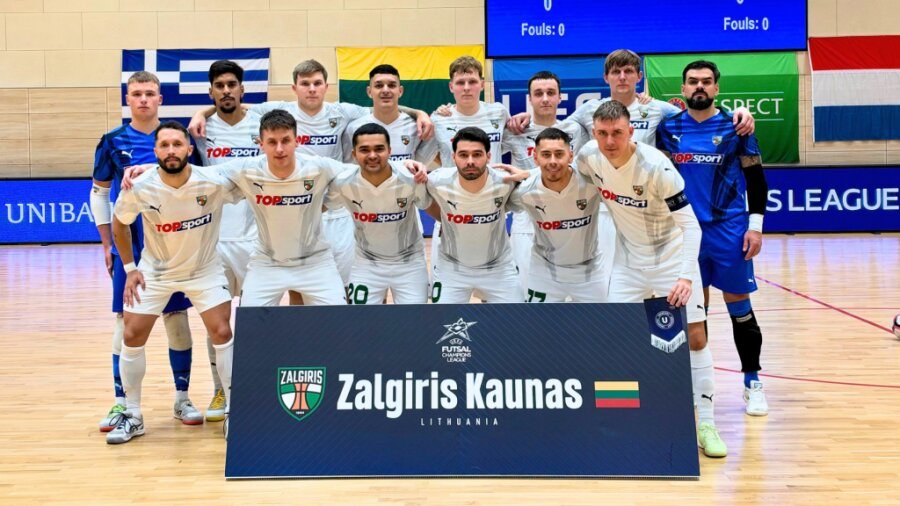
„Kauno Žalgiris“ pergale pradėjo UEFA futsal Čempionų lygos pagrindinį etapą

Futsal A lyga, kurią remia TOPsport: Kėdainių ir Vilkaviškio komandų vargai

Elitinės jaunių lygos apžvalga (12-oji savaitė)

Startuoja išankstinė abonementų prekyba 2027 metų sezonui

FIFA U15 pasaulio čempionato ir festivalio metu – žaidėjų edukacijos svarba
Dažniausi klausimai apie Lietuvos futbolą
Naujienos, turnyrinės lentelės, klubai ir sirgalių diskusijos – svarbiausios nuorodos vienoje vietoje.
Kur skaityti naujausias Lietuvos futbolo naujienas?
Futbolo naujienų skiltyje rasite 90min.lt publikuojamas žinias apie Lietuvos klubus, rinktines ir varžybas. Pradžios puslapio pagrindinėse vietose rodomos skaitomiausios per pastarąsias 48 valandas paskelbtos publikacijos, o visas naujienas galite peržiūrėti atskirame sąraše.
Kur rasti TOP lygos (ex A lygos) turnyrinę lentelę?
Atverkite turnyrinės lentelės puslapį. Lygindami komandų vietas ir taškus patikrinkite, kurio sezono duomenys pateikiami. Apie čempionatą ir klubų pasirodymą galima diskutuoti futbolo forume.
Kur ieškoti Lietuvos futbolo rungtynių rezultatų?
Rezultatų skiltyje pateikiami svetainėje sukaupti rungtynių duomenys. Rungtynių aplinkybių, sudėčių ir sirgalių vertinimų ieškokite naujienose bei atitinkamo klubo forumo temoje. Lentelė ir rezultatai nėra tiesioginės transliacijos paslauga.
Kur diskutuoti apie FK Žalgirį, Kauno Žalgirį ir kitus klubus?
Lietuvos futbolo klubų skyriuje klubai turi atskiras diskusijų temas. Jose aptariamos rungtynės, sudėtys ir klubo naujienos. Norėdami parašyti savo žinutę, prisijunkite arba užsiregistruokite.
Kur sekti žaidėjų perėjimus ir transferų gandus?
Perėjimai aptariami transferų skyriuje ir atskirų klubų temose. Sirgalių paskelbtas gandas nėra patvirtintas perėjimas: tikrinkite, ar pateiktas klubo, žaidėjo ar varžybų organizatoriaus pranešimas.
Kur rasti draugiškų klubų rungtynių aptarimus?
Draugiškų klubų rungtynių temoje rasite sirgalių pranešimus ir aptarimus. Prieš naudodamiesi informacija atkreipkite dėmesį į temos metus ir konkrečios žinutės datą – forumas taip pat saugo ankstesnių sezonų diskusijas.
Kur aptariama Lietuvos rinktinė ir UEFA Tautų lyga?
Rinktinės pasirodymus galima aptarti UEFA Tautų lygos diskusijoje ir rinktinei skirtose naujienose. Tautų lygos grupių lentelės skiriasi nuo Lietuvos klubinio čempionato lentelės; galutinę oficialią varžybų informaciją tikrinkite pas organizatorių.
Kuo TOP lyga skiriasi nuo ankstesnio A lygos pavadinimo?
Kalbant apie Lietuvos aukščiausiąją futbolo lygą, naujesniuose šaltiniuose vartojamas TOP lygos pavadinimas, o ankstesnių sezonų naujienose ir forumo archyvuose – A lyga. Ieškodami senesnių rungtynių ar diskusijų tikrinkite abu pavadinimus ir sezono metus.